
Stop Leading with Tools: Why CIS Controls for MSPs Are Your Real Strategy
Most MSPs are tool-rich and strategy-poor.
We love to debate the merits of one EDR versus another...
Ask any MSP professional what they dread dealing with most on a given workday, and you’ll likely hear the same universal groan: timesheets.
As an industry, we have a visceral, negative response to the administrative paperwork we know we need to do but don't want to. It highlights how, in our field, incredibly smart people often fail to do what they know they should.
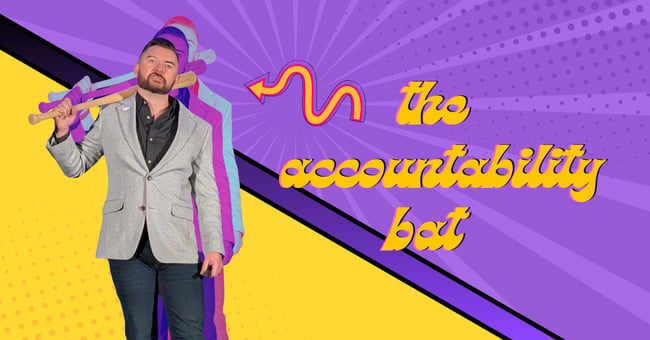
Years ago, I used to joke that I needed an "accountability bat" to get employees to enter their time. It’s a funny visual, but it points to a serious reality. Sometimes, you need to recognize that you have to swing that bat at your own discipline.
That is true whether you are trying to submit cleaner time, build better documentation habits, move from Tier 2 to Tier 3, or figure out how to grow in an MSP career without waiting for someone else to hand you the plan.
If you want real MSP career growth, you have to stop avoiding the hard things. Real MSP professional development starts when you build the discipline to consistently do the uncomfortable work.
Why do we look up a best practice, decide it sounds like too much work, implement half of it, and then complain when it fails? Because biologically, we are programmed to avoid discomfort.
Psychological research shows that when you are in a situation where you feel judged and lack control, your cortisol levels spike. You enter fight or flight. Your biology acts like a legacy firewall with a strict "Zero Trust" policy applied to anything new or risky: Hard conversation? Denied. New technical project? Blocked. Asking for a promotion? Dropped.
Your brain thinks there is a tiger in the room. But here is the truth you have to remember: the server is not a tiger.
Boldness and resilience are built by manually reconfiguring those internal firewall rules. You have to put yourself in uncomfortable situations, like building a home lab where things break, or volunteering for a complex weekend project, and allow yourself to get "shocked" a few times.
That is how you build a tolerance to stress.
MSP professional development cannot depend on motivation alone. If the work only happens when you feel confident, comfortable, or completely ready, it will not happen often enough to change your career.

If you bypass that firewall and try something difficult, you will fail. And that is exactly what you need.
In professional baseball, failure is baked into the model. An All-Star player fails to hit the ball 75% of the time. Yet, early in our IT careers, we feel terrified of failing on a single ticket. We treat failure as a disaster rather than the necessary friction required to update our own operating systems.
Take the Apollo 13 mission, the most successful failure in modern history. They were 200,000 miles from Earth when their oxygen tank blew up. That crisis instantly changed their definition of success. The mission to the moon failed, but thanks to their extensive preparation, the people survived.
As MSPs, we live our own versions of this. A server goes offline at 3:00 AM because someone ignored a disk space alert and ran an update, causing the system to crash. The outage is a crisis, but it's really an audit of your documentation and your resilience.
When the crisis hits, you don't rise to the occasion; you default to the level of practice you put in beforehand. Are you doing the uncomfortable practice before the outage?

If you want to push through the discomfort of growth, you have to ask yourself a blunt question: What do you actually give a s*** about?
If going from a Tier 2 to a Tier 3 engineer and making an extra $15,000 a year doesn't actually motivate you to do the hard work, you need a reality check. Generic goals will not move you. You have to find something worth putting yourself out there for, and then map out a plan.
For those who want the blueprint for managing their own discipline and hitting those goals, it comes down to a repeatable cycle. It takes leadership to set the vision, and it takes extreme ownership to execute it.
The greatest threat to your career is the habit of waiting.
We wait for management to figure it out. We wait for vendors to release a feature. We wait until the calendar hits January 1st to start trying. We let the calendar become our tiger.
If your MSP has a toxic "that's just how we do it here" culture, you have to take back your agency. Don't let others be your excuse. Find an accountability partner in the community, put in the reps, and dare to suck at something new.
Your new professional policy should be simple: If I'm afraid, I swing the bat.
Want to dive deeper into building career resilience? You can watch the full recording of my keynote (complete with the actual accountability bat) right here: MSPGeekCon 2026 - Monday Keynote with Kyle Christensen.
And seriously, submit your timesheets.

.png?noresize&width=590&name=Jennifer%20(1).png)
.png?noresize&width=590&name=Deep%20Dive%20-%20Blog%202%20(5).png)