
New Scenario Every Quarter
No repetition. No predictable pattern. Each round introduces a fresh challenge that reflects real MSP realities.
-
New insights each quarter as your team faces different breach types and business impacts.
-
In this scenario, something has gone wrong in the Wizarding World. Your team will have to investigate the clues, assess the risk, and decide how to respond before the situation gets even darker.
Strengthen Decision-Making
Real incidents demand quick thinking, clear priorities, and coordinated action. This simulation helps your team build that muscle through experience.
-
Better prioritization instincts under pressure, even when information is incomplete.
-
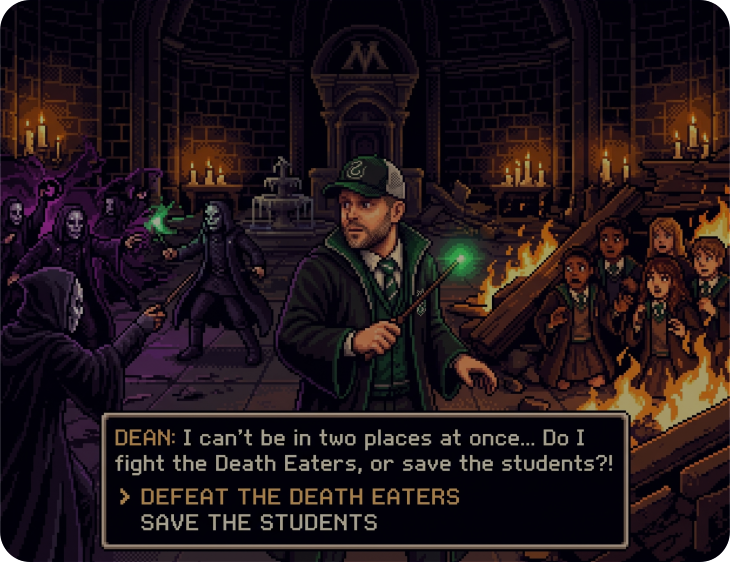
Your team will have to weigh incomplete facts, competing priorities, and fast-moving consequences. Do you focus on containment first? Patient notification? Investor communication? Trial continuity? Client leadership alignment?
-
The simulation helps your team practice making decisions before they have to make them for real.
Build Cross-Team Alignment
Every role has a stake in an incident; from techs to leadership to client-facing teams.
This experience shows how each decision affects everyone else.
-
A breach like this does not stay inside the security team.
-
Technical teams investigate. Leadership sets priorities. Client-facing teams manage communication. Account managers handle trust. Operations teams track impact. Everyone has a role, and every handoff matters.
-
Trouble in Techland helps your team see how those decisions connect.
Learn By Doing, Not Reading
Simulations create lessons that stick — far more than a webinar or a slide deck.
-
This is not a webinar where everyone passively watches slides.
-
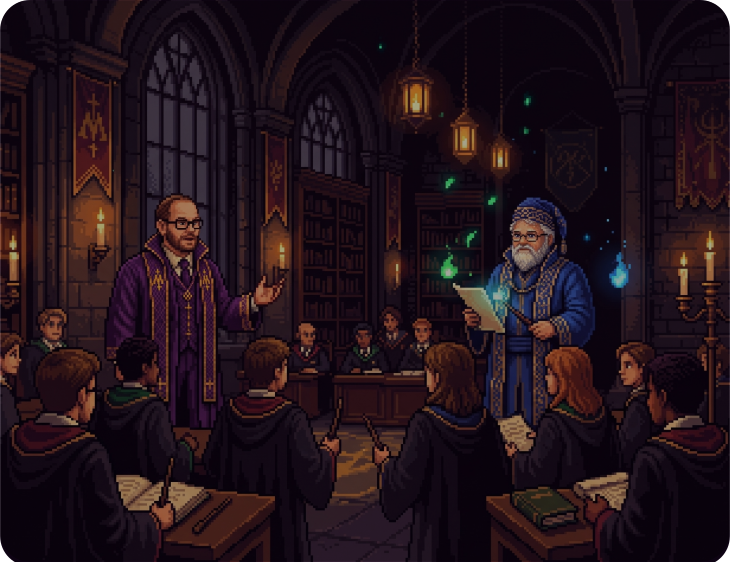
The IR Game engine reacts to team choices in real time. Some decisions help stabilize the situation. Others create new problems. Either way, your team learns what holds up under pressure and what breaks when the incident becomes messy.
Everyone Can Take Part
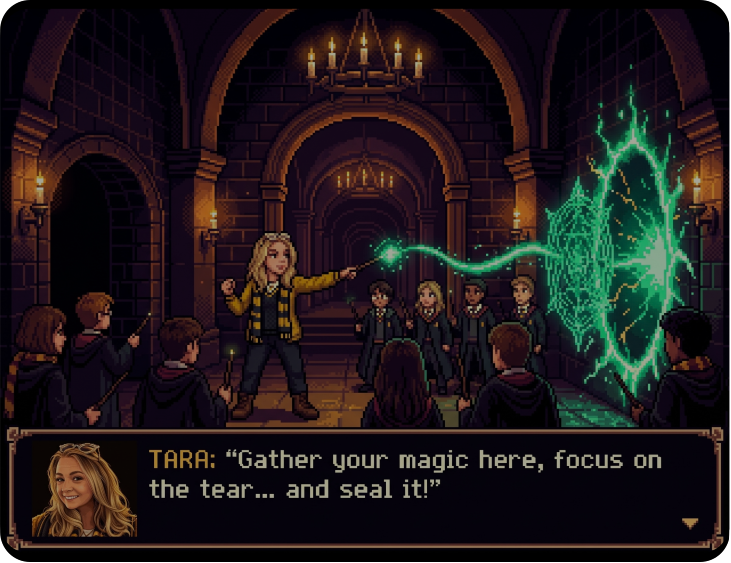
Even if you don’t join the scenario directly, you still learn through guided choices and live vote-driven consequences.
-
You do not need to be a cybersecurity expert to participate.
-
Whether you are in service, sales, leadership, ops, HR, account management, or technical delivery, this scenario is designed to show how different roles influence the outcome of a serious incident.
-
You can join directly as a participant or follow along as a viewer, voting on key decisions and helping shape what happens next.

IR Games is built for the way MSPs actually operate: multiple roles, shared responsibility, and clients who expect fast answers. The platform lets your entire team experience a breach from every angle. Techs troubleshoot. Account managers communicate. Leadership sets priorities. Dispatch navigates the noise.
By simulating real cross-team pressure, IR Game exposes gaps in process, communication, and assumptions long before a real incident hits your service desk.