Is Your MSP Haunted? The Telltale Signs of an Untrained Team
Forget ghosts, goblins, and things that go bump in the night. Let's talk about the things that...
.png)
For decades, the hierarchy of an MSP help desk was built on a simple scarcity of knowledge. AI leveled that hierarchy by giving every technician, regardless of experience, instant access to the same answers.
But equipping your team with a powerful tool isn't the same as solving the problem. In fact, for many MSPs, it just created a new one.
Instead of making management easier, AI has created a dangerous new operational reality, one where a service desk can collapse under the weight of its own tools.
In the December session of Service Manager Cohort, we tore apart this new reality to answer the big question: If the knowledge gap is gone, what is left for the MSP Service Manager to actually manage?
.png)
The Service Manager Cohort is a monthly session for the leaders on the front lines. Hosted by Kyle Christensen and Todd Kane, it brings together MSP Service Managers and Delivery Leaders to tackle the messy, tactical side of running a help desk.
From building employee scorecards to creating departmental "strategy in a vacuum," this is where operational excellence gets built, a place for peer-to-peer problem solving on how to manage the metrics and the humans that drive your service delivery.
In our December session, the topic was AI and Discernment, and the consensus was clear: AI is changing the rules of management faster than most MSPs are ready for.
.png)
Let’s talk about the new AI Slop loop.
It starts when a technician needs to send a simple update to a client or a manager. Instead of writing three clear bullet points, they prompt ChatGPT to "write a professional update."
The result is a 500-word wall of text full of corporate fluff. It looks impressive. It looks like "work."
But then the manager receives it. They don't have time to read 500 words of AI-generated filler, so they copy-paste it into their own AI tool and ask for a summary.
This is Productivity Theater.
You have two employees using two expensive tools to generate zero net value. The technician feels productive because they "wrote" a long email. The manager feels productive because they "analyzed" it. But in reality, you just added two layers of friction to a simple communication.
As Kyle emphasized, "I’m not reading 600 words of your AI garbage. I need the three lines that give me the answer."
The fix isn't to ban AI; it's to stop rewarding the noise.
Instead, train your team to use AI as a tool to refine their thinking, not replace it. If they can't explain the why in three sentences, they don't understand the problem.
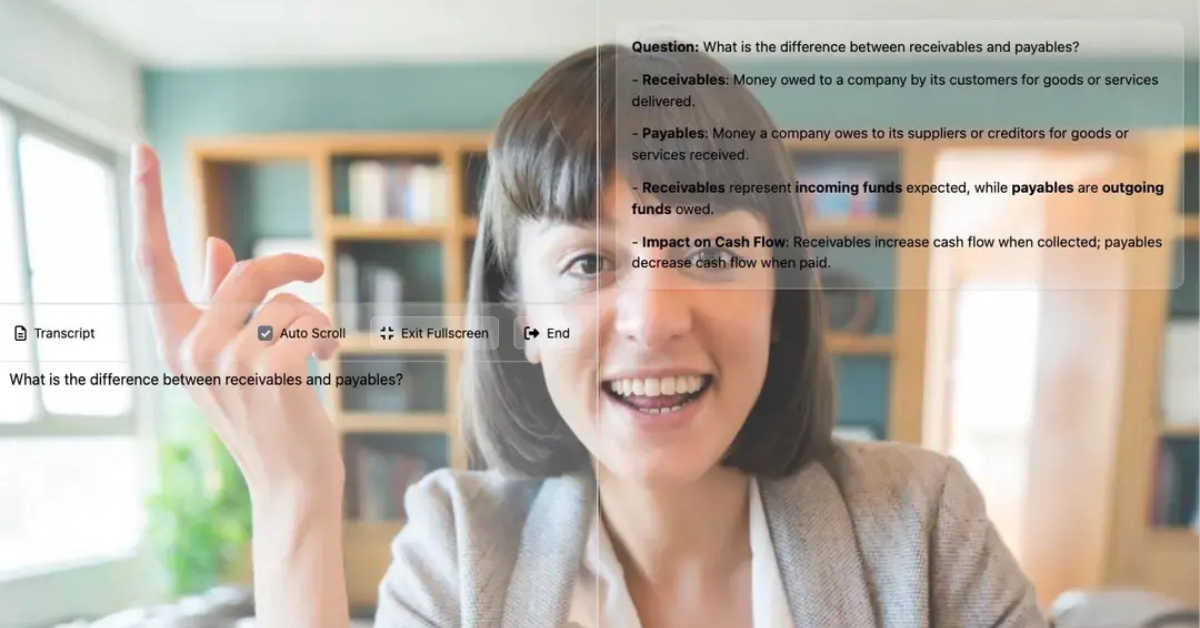
The rise of instant answers isn't just affecting your current team, it's breaking your hiring process.
In the cohort, Todd shared a story that is becoming all too common. He interviewed a candidate who he was sure was using AI in real-time to answer questions.
Every time he asked a technical question, there was a pause, a glance at a screen, and then a perfectly structured, textbook answer. When he asked for a clarification, the candidate scrolled back up, waited, and delivered another polished response.
Is this cheating? Or is it resourcefulness?
The old-school view says it’s cheating. But in 2026, finding the right answer quickly is part of the job. The problem isn't that they used AI, the problem is that the interview questions were testing trivia, not thinking.
If your interview process relies on questions like "What layer of the OSI model is a switch?" you are interviewing the candidate's AI, not the candidate.
To hire for the AI era, the MSP service manager must stop testing memorization and start testing first principles. Ask them about a time they failed. Give them a scenario where the textbook answer is wrong and see if they can spot the trap.
You need to see their logic, not just their output.

If knowledge is cheap, then the only currency left is judgment.
In the cohort, guest Luis Geraldo introduced a concept that should be the guide for every modern Service Manager: Discernment.
It’s the ability to look at a technically correct answer from an AI and ask: "Is this the right answer for this specific client, at this specific moment, given their specific risk tolerance?"
An AI can tell a Tier 1 tech how to reset a firewall. It cannot tell them if resetting that firewall during business hours will cause a political crisis with the client's CEO.
You cannot automate judgment. You have to train for it.
The old way of training was teaching the "what" (the steps). The new way must teach the "why" (the first principles).
You can't just hand a junior tech a powerful tool like ChatGPT and expect a senior result. They need the foundational mental models to know when the AI is hallucinating or when it's recommending a "textbook" fix that breaks your internal SOPs.
To build a team that doesn't just copy-paste answers, you have to stop training for memorization and start training for context.
.png)
In a world where content is free and answers are instant, your job shifts from managing volume to managing judgment.
You need to stop rewarding the 500-word email and start rewarding the three-sentence decision. You need to stop hiring for trivia and start hiring for first-principles thinking. And you need to train your team to use AI as a tool for leverage, not a crutch for laziness.
Want to get the full context of the discussion? You can view the full replay in the Empath app.
These sessions are free to join live. It's your chance to ask questions and problem-solve with peers in real-time. But the replays, along with our entire library of expert-led courses and community resources, live exclusively in the app. It’s the central hub designed to help you level up your skills, build a better MSP, and connect with other Service Managers who are solving the same problems you are.
Don't let your service desk collapse under the noise.
👉 Check out our Events Page for the next live session
👉 Start your 14-day free trial to access the full replay and join the conversation